Triphala Benefits: Ayurvedic Blend for Digestion, Gut Health & Daily Wellness
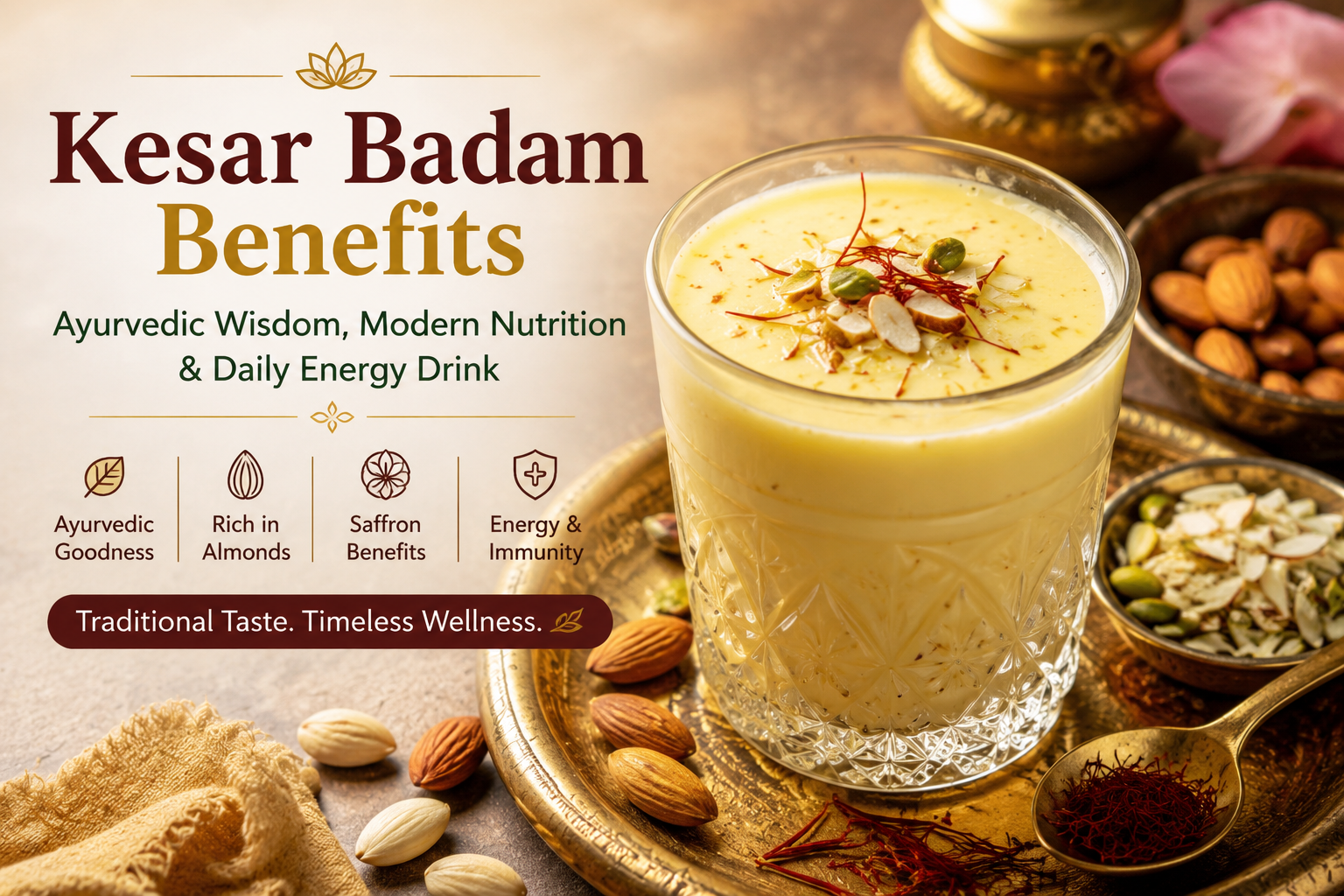
For centuries, Indian households have trusted simple kitchen traditions for nourishment, strength, and seasonal wellness. Among these timeless recipes, Kesar Badam milk holds a special place. Served during winters for warmth, during festivals for celebration, and after long tiring days for comfort, this royal drink combines the richness of almonds with the aroma of saffron in a way that is both indulgent and nourishing.
In Ayurveda, almonds are considered Balya (strength-promoting), while saffron is valued for its warming and rejuvenating qualities. Modern nutritional science now supports many traditional beliefs around almonds and saffron, especially for energy, antioxidants, healthy fats, and overall wellness.
Today, busy lifestyles have reduced the time available for traditional preparation. That is where convenient premixes inspired by homemade recipes — like Phunti Masale VSM Kesar Badam Sharbat Premix — help bring traditional wellness into modern daily routines. The product is positioned as a traditional almond-saffron drink mix suitable for both hot and cold use, without preservatives or artificial colours.
The Traditional Importance of Kesar Badam in Indian Households
Across North India, Rajasthan, Gujarat, Punjab, and Mughal-inspired culinary traditions, Kesar Badam milk has long been associated with:
- hospitality
- winter nourishment
- festive celebrations
- recovery from fatigue
- post-fasting nourishment
- children’s nutrition
- senior wellness
Historically, saffron (kesar) was considered a luxury ingredient reserved for royal kitchens and Ayurvedic preparations. Almonds (badam) were soaked overnight and ground into milk-based drinks to improve digestibility and richness.
Even today, many Indian families prepare:
- warm badam milk before sleep,
- chilled kesar sharbat during summers,
- festive drinks during Holi, Eid, and Diwali.
What Ayurveda Says About Almonds and Saffron
Almonds (Badam) in Ayurveda
Ayurveda describes almonds as nourishing for:
- strength (balya)
- mental clarity
- tissue nourishment (dhatu poshan)
- stamina
- overall vitality
Traditionally, soaked almonds are often recommended because soaking may improve digestibility.
Modern research also shows almonds contain:
- healthy fats
- vitamin E
- magnesium
- plant protein
- antioxidants
According to the
Saffron (Kesar) in Ayurveda
Saffron has traditionally been associated with:
- warmth and balance
- mood support
- rejuvenation
- digestion
- premium wellness formulations
Modern research suggests saffron contains antioxidant compounds such as:
- crocin
- safranal
- picrocrocin
A review published by the National Institutes of Health (NIH) discusses saffron’s antioxidant and wellness-supporting properties.
Modern Nutrition Behind Kesar Badam Benefits
- Natural Energy Support
Almonds provide calorie-dense nutrition along with healthy fats and carbohydrates that can support sustained energy.
Phunti Masale Kesar Badam Premix also positions itself as an “energy drink mix” suitable for all ages and seasons.
This makes Kesar Badam drinks useful for:
- morning nutrition
- evening fatigue
- study sessions
- festive fasting
- post-travel tiredness
- Supports Seasonal Wellness
Warm saffron almond milk has traditionally been consumed during colder months because of its comforting and warming nature.
The premix is designed for:
- hot milk in winters
- cold sharbat in summers
- year-round use
- Antioxidant-Rich Ingredients
Both almonds and saffron naturally contain antioxidant compounds.
Antioxidants help protect cells from oxidative stress caused by:
- pollution
- lifestyle stress
- irregular eating habits
- environmental factors
Research from the Cleveland Clinic highlights almonds as a source of antioxidants and healthy fats.
- Family-Friendly Wellness Drink
Traditional Indian drinks survive for generations because they are versatile and suitable across age groups.
The product positioning also highlights:
- all-age suitability
- easy preparation
- family wellness use
- dessert compatibility
It can be used in:
- milk
- chilled drinks
- kheer
- rabdi
- festive desserts
Why Traditional Drinks Are Returning in Modern Lifestyles
Today many people are shifting from highly processed beverages toward:
- traditional recipes
- clean-label drinks
- preservative-free options
- culturally familiar nutrition
This growing preference is visible in:
- homemade spice blends
- Ayurvedic beverages
- millet-based drinks
- digestive drinks
- saffron and nut-based formulations
Phunti Masale VSM positions its Kesar Badam Premix as:
- preservative-free
- no artificial colours
- inspired by traditional recipes
- suitable for hot or cold use
How to Use Kesar Badam Premix
Hot Kesar Badam Milk
Mix 1 tablespoon into warm milk and stir well.
Best for:
- winter evenings
- bedtime drinks
- morning nourishment
Cold Kesar Badam Sharbat
Mix with chilled milk or cold water.
Best for:
- summer refreshment
- festive serving
- guest hospitality
Dessert Enhancer
Can also be used in:
- kheer
- rabdi
- kulfi base
- festive sweets
The product serving recommendation suggests 10–15 g per serving in hot or cold milk.
Ingredients Traditionally Associated with Kesar Badam Drinks
Phunti Masale Kesar Badam Premix contains:
- Almond Powder (Badam)
- Natural Saffron Flavor
- Cardamom (Elaichi)
- Sugar
Cardamom itself has traditionally been used in Indian kitchens for aroma and digestive balance.
Are Kesar Badam Drinks Good for Daily Use?
When consumed in moderation as part of a balanced diet, almond and saffron-based drinks can fit well into:
- family nutrition routines
- festive diets
- seasonal wellness habits
- evening nourishment traditions
The product itself is marketed as a “daily nutrition drink” and “family drink mix.”
Who May Enjoy Kesar Badam Drinks?
Kesar Badam drinks are commonly enjoyed by:
- children
- working professionals
- elderly family members
- students
- festive guests
Especially during:
- winters
- fasting periods
- celebrations
- family gatherings
Final Thoughts
Traditional Indian wellness was never built around complicated routines. It was built around simple, nourishing habits repeated daily across generations.
Kesar Badam milk remains one of those timeless traditions — combining taste, comfort, and nutrition in a single cup.
With modern convenience and clean-label formulations, products inspired by these homemade recipes can help preserve cultural food wisdom while fitting into fast-paced lifestyles.
Phunti Masale VSM Kesar Badam Sharbat Premix continues this philosophy with a preservative-free almond and saffron drink mix designed for modern families seeking both taste and tradition.
Frequently Asked Questions (FAQ)
What are the benefits of Kesar Badam milk?
Kesar Badam milk is traditionally consumed for nourishment, warmth, energy, and festive wellness. Almonds provide healthy fats and vitamin E, while saffron contains antioxidant compounds.
Can Kesar Badam be consumed daily?
In moderation and as part of a balanced diet, Kesar Badam drinks can be enjoyed regularly.
Is Kesar Badam good in summer?
Yes. Traditionally it is consumed both hot in winters and cold as a sharbat during summers.
Can children drink Kesar Badam milk?
Traditionally, Kesar Badam drinks have been consumed by all age groups, including children and elders.
How do you prepare Kesar Badam drink?
Mix the premix into hot or cold milk and stir well. It may also be added to desserts like kheer or rabdi.
Royal Taste, Daily Nourishment
Enjoy the richness of almonds and saffron in a comforting traditional drink crafted for everyday wellness, energy, and family moments — hot or cold, any season.
Experience Traditional Goodness